

An analogue celebration of Texan tailoring and film photography.
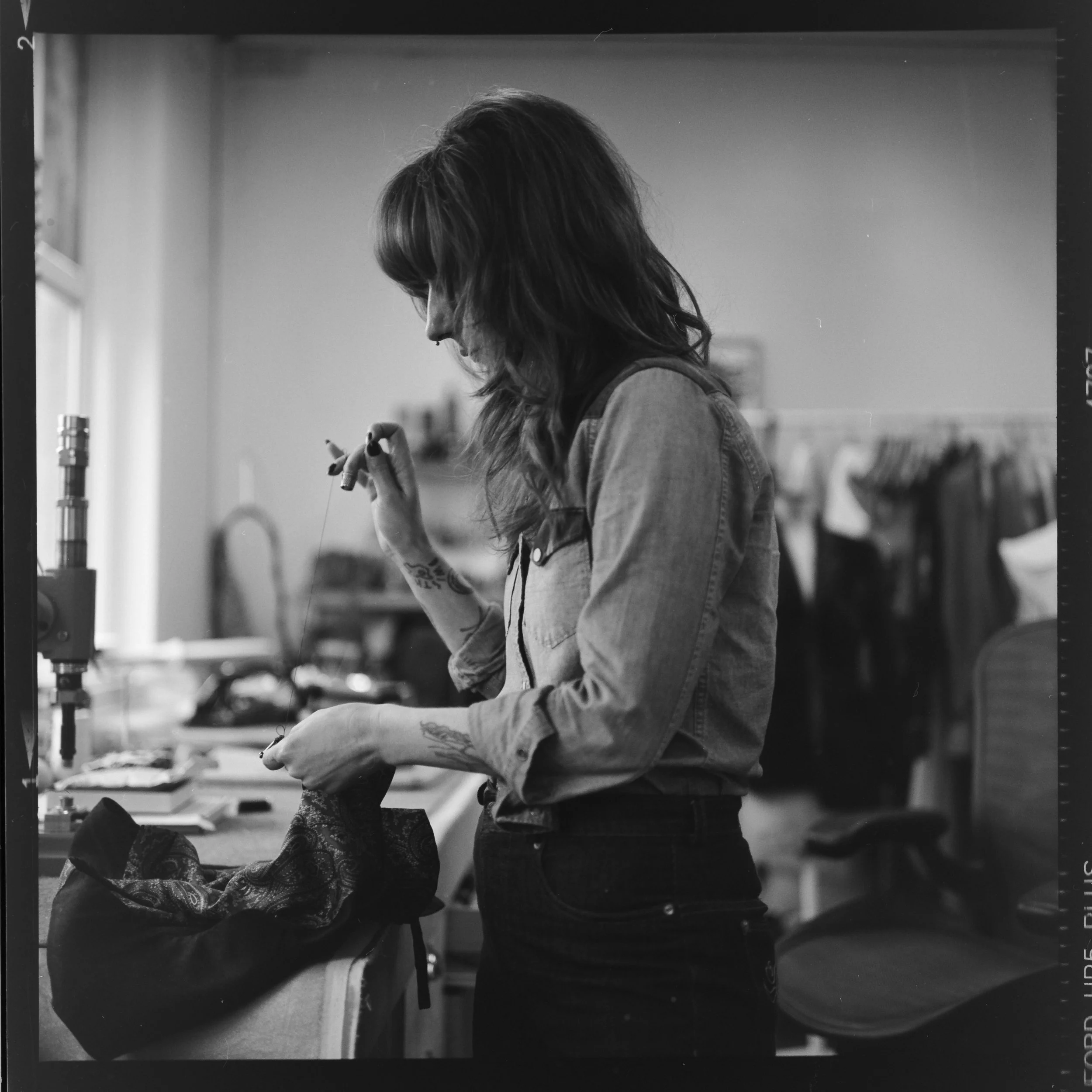
The cowboy tailor, Kellye Sue Coffyn @long.time.gone
So this is where I outline how this whole thing came into being.
In October 2025 I had not met Kellye, but we had some mutual friends on Instagram. She had posted some lovely portraits / headshots that Tim Dunk had done for her, and I messaged and said something along the lines of “great images - if you ever want any done on film, let me know!”
Kellye got back to me and said that she didn’t want any more headshots, but she was about to start work on a bespoke suit, and would I like to document its creation?
At this point I was very much in need of a creative project I could get my teeth into. I was still making lots of images of brutalist architecture, and doing portrait sessions from time to time, but I wanted something with a bit of heft to it.
So I said yes.
At the outset I didn’t know what this would involve, how long it would take, where it would take us, or what we would do with the images, but I said yes. It felt right.
I did impose some constraints on myself, however:
One roll of medium format film per session. No more, no less.
Use the same film stock each time (Ilford HP5+).
Use the same camera each time (Rolleiflex 2.8f)
These constraints helped in several ways. Firstly, they prevented me spending time thinking about what camera and film stock to take to each session. With those choices already made I could focus on the work itself. Secondly, they imposed both a limit and a commitment in terms of the number of exposures. By sticking to one roll of HP5+ I knew I only had twelve exposures to make, so each one had to count. And I had to make twelve. No half measures.
This meant that composition and metering became even more important than usual. The Rolleiflex 2.8f has a built in selenium light meter which is normally perfectly adequate, but shooting as we were in the late morning of an English winter before what little sun that there was had come round to the right side of the building, we couldn’t take chances. I therefore relied heavily on my incident meter.
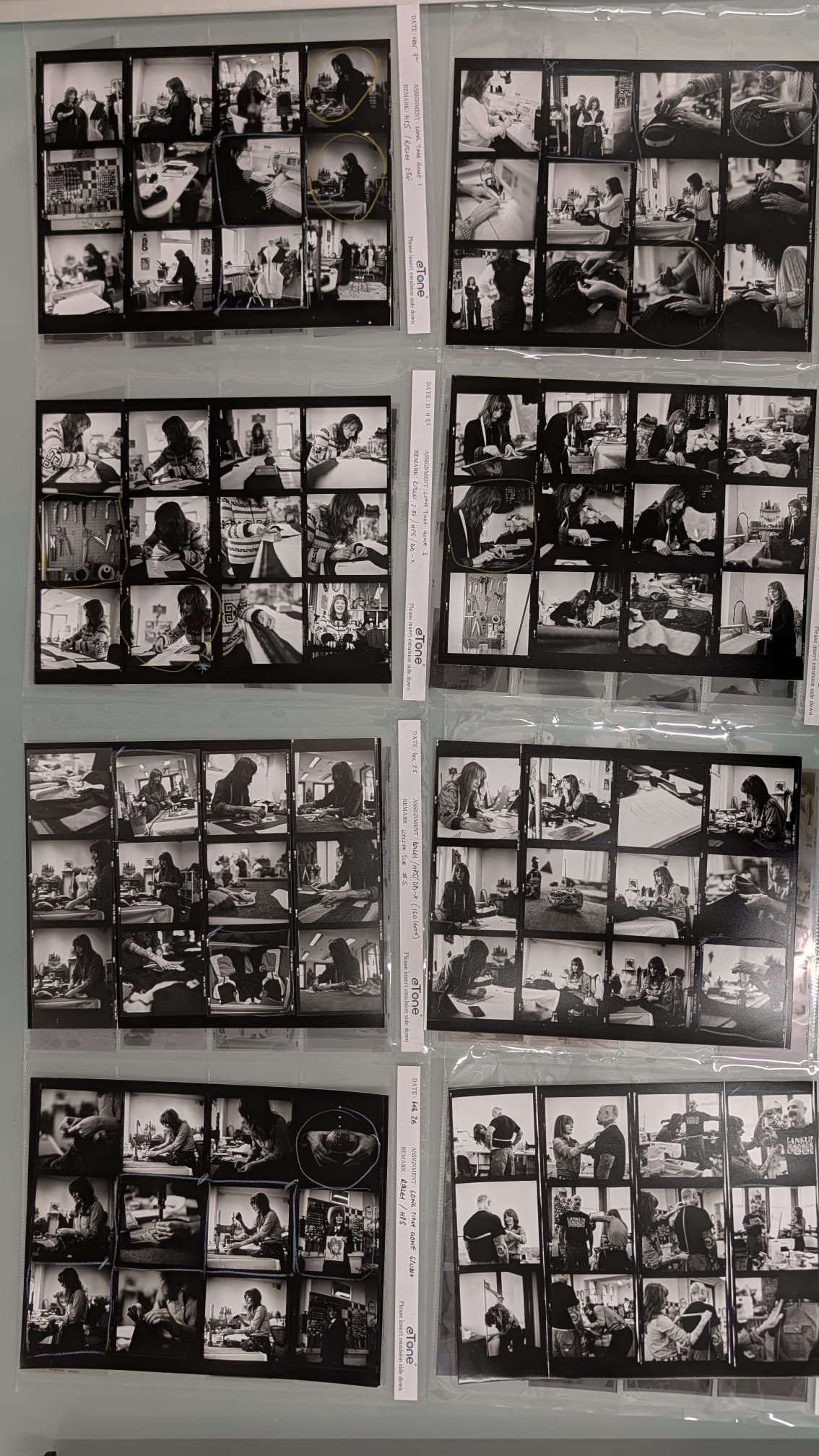
The proof of the pudding is in the contact sheets, and I was very pleased with how they looked. Consistent exposures and by and large a good number of keepers. Another benefit of using one roll of film per session is that your contact sheet captures that session - nothing else. No random images you grabbed on the way, no pictures of the cat to finish the roll. Just the project itself.
And so we embarked on it. At the first session we talked a little about what we were doing there and then and how many weeks it might take, but we didn’t plan it out.
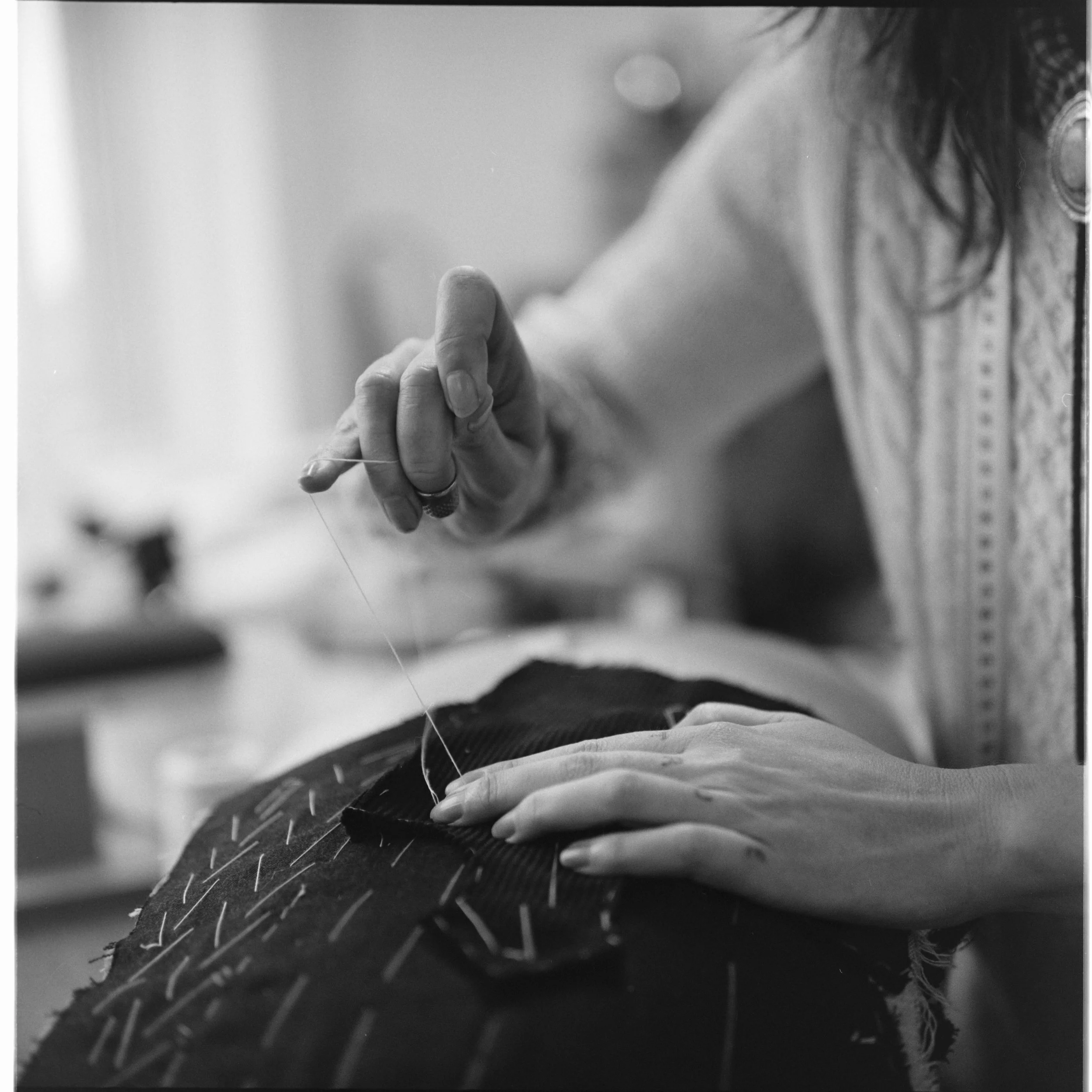
Kellye’s work on the suit was largely traditional Savile Row tailoring (the gold standard) with decorative and design flourishes providing a tilt of the Stetson to her Texan origins. It was such a privilege to be able to capture all the different stages of the creation of this amazing garment. I can’t overstate the levels of skill and experience required to produce work at this level. For instance - have you ever tried to sew a buttonhole? It is widely held that you need to sew a hundred buttonholes before you’re actually good at them.
Being able to document the stages - the drafting and cutting, first fitting, creation of the floating canvas, the basting, etc etc - right the way up to capturing images of Kellye wearing the finished suit at the end of our last session, was something I will cherish.
In this age of fast fashion and digital photography, it is perhaps not too difficult to see the link between analogue photography and traditional tailoring. I wanted the images I created to have a bit of a timeless feel to them, to have them not obviously rooted in the 21st Century.
We worked together over the contact sheets, carefully selecting the images to print. It wasn’t always a question of the strongest images from a technical point of view, but ensuring we had a range which captured properly the process involved.
As we worked through the project we agreed that an open studio event showcasing the images and the studio where the suit was made would be a good idea. With 23 images to print, I spent a significant amount of time in Aire Street Darkroom.
With the final images printed and hung, we were both delighted with the results.
The exhibition itself was a great success with a good turn out on both days. People loved being able to see the images and then move into the studio and see everything for themselves. I do feel like the location of an exhibition has such a big impact on both the audience and the way the show hits. In this case, it couldn’t have been better.
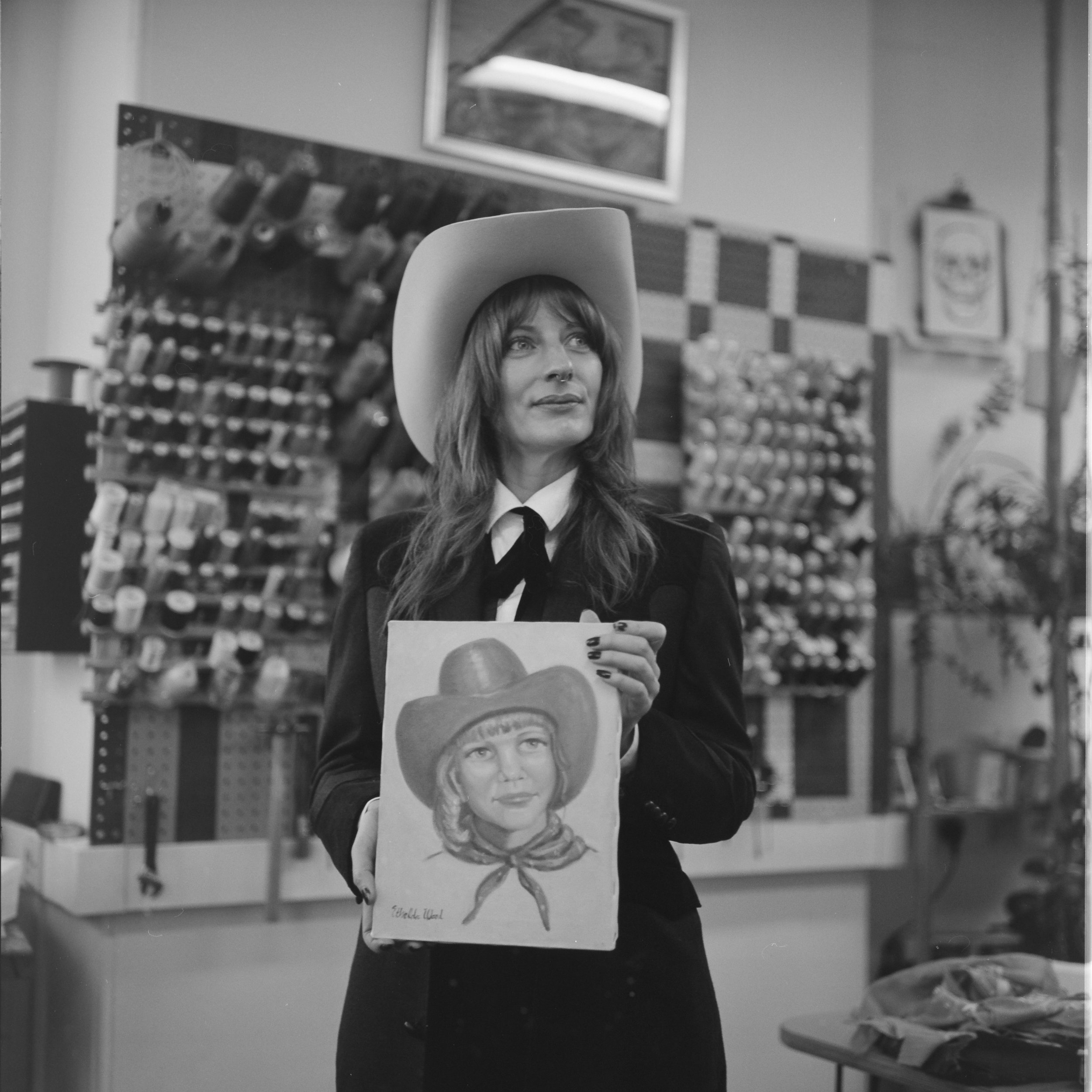
For me, this doesn’t feel like an ending. Yes, the suit is complete so this element of the project is also finished, but there are several other offshoots of this which I am very excited about.
There is more to come. But in the meantime, please explore the images here.