

A love for natural light
I wanted to go on a bit about how much I love shooting in natural light. But before I do I wanted to make it clear that I am not a physicist so anything I say in the below about the scientific properties of light and how it interacts with film etc really should have one of those Wikipedia [citation needed] tags. So bear that in mind.
So whilst I love shooting in the studio with big beauty dishes and soft boxes and off camera strobes, I enjoy working with natural light the most of all. There’s something about it that has a quality that is unique and difficult to replicate with artificial light sources. I think one of the other reasons I like natural light is that it is out of our control (to a greater or lesser extent). Obviously if it’s too bright you can close curtains or add shades, but you have to work with what’s there. I quite like having constraints placed on me, and film photography has plenty of those. For example, once you load your roll of film, your ISO is fixed until you finish that roll - that’s a constraint which forces you to make decisions about aperture size and shutter speed. On many older cameras the maximum shutter speed might be 1/500, which again limits the range of apertures you’re able to use. So adding to the limits already placed on me by working with film the fixed amount and quality of natural light is another constraint which I quite enjoy.
Anyway, let’s have an example of an image which makes good use of natural light:
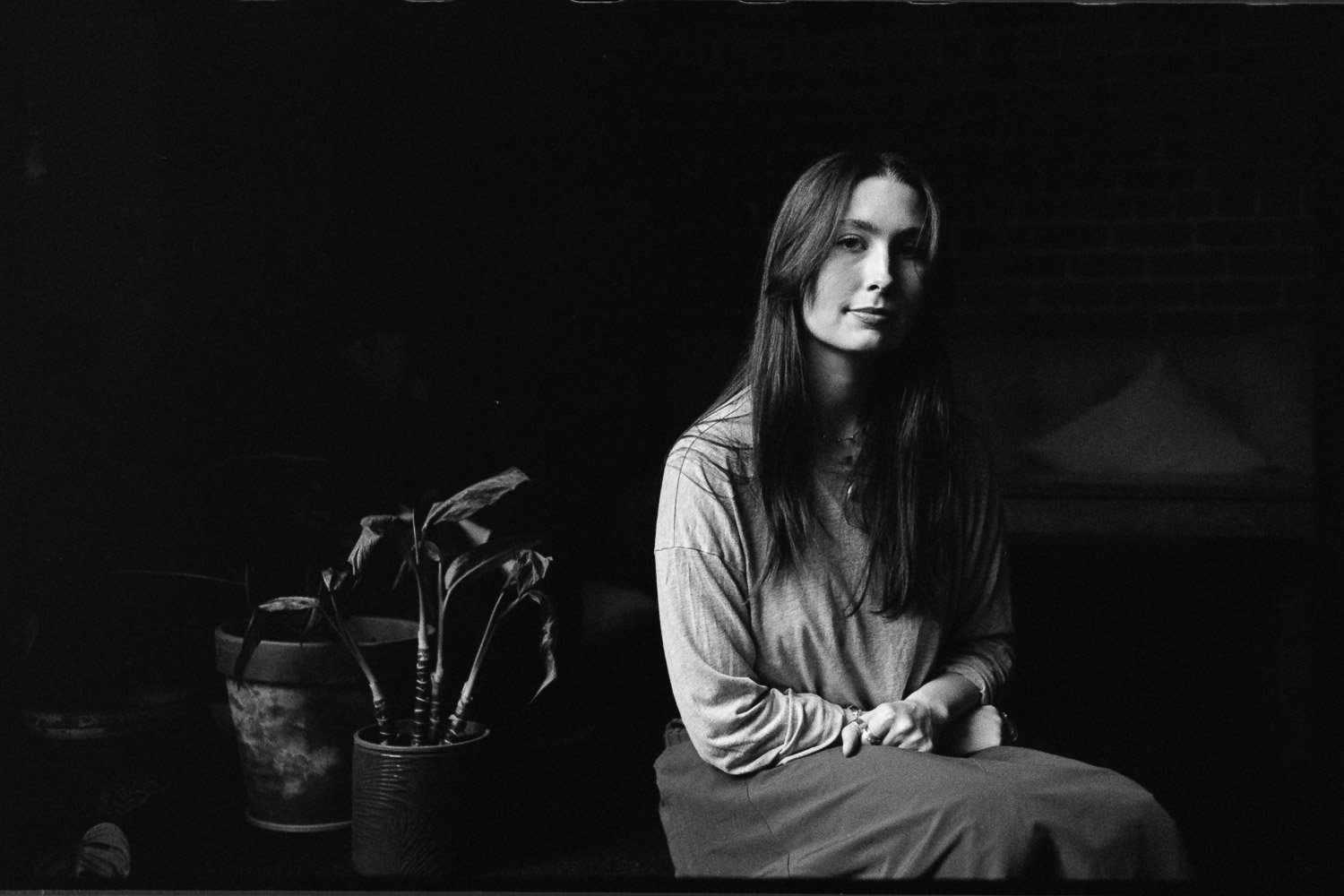
Leica M2, Kodak Tri-X 400
This shot was taken at one of the open days at Lightspace Studio in Meanwood. Despite the calm and peaceful image, the place was full of dancers, models, and photographers all trying to make incredible images. Several people were already shooting this dancer, and I thought she would make an amazing subject. I was working with my beloved Leica M2 which has no meter, so I asked if I could just step in and take an incident reading. This means holding your meter in front of the model and pointing the little dome at where you will be photographing from. I wanted to do this so the exposure would be perfect to capture the light pouring through the large high windows and providing an almost Rembrandt like effect.
So once I had done that I set my aperture size and shutter speed and made the exposure. I was really pleased I had interrupted the other photographers to step in and take the reading. I could have done an evaluative reading of the general area, but that would have meant the meter trying to make those dark areas lighter (to get to mid-grey overall) and that would have overexposed the subject.
Here’s another shot from the same day:
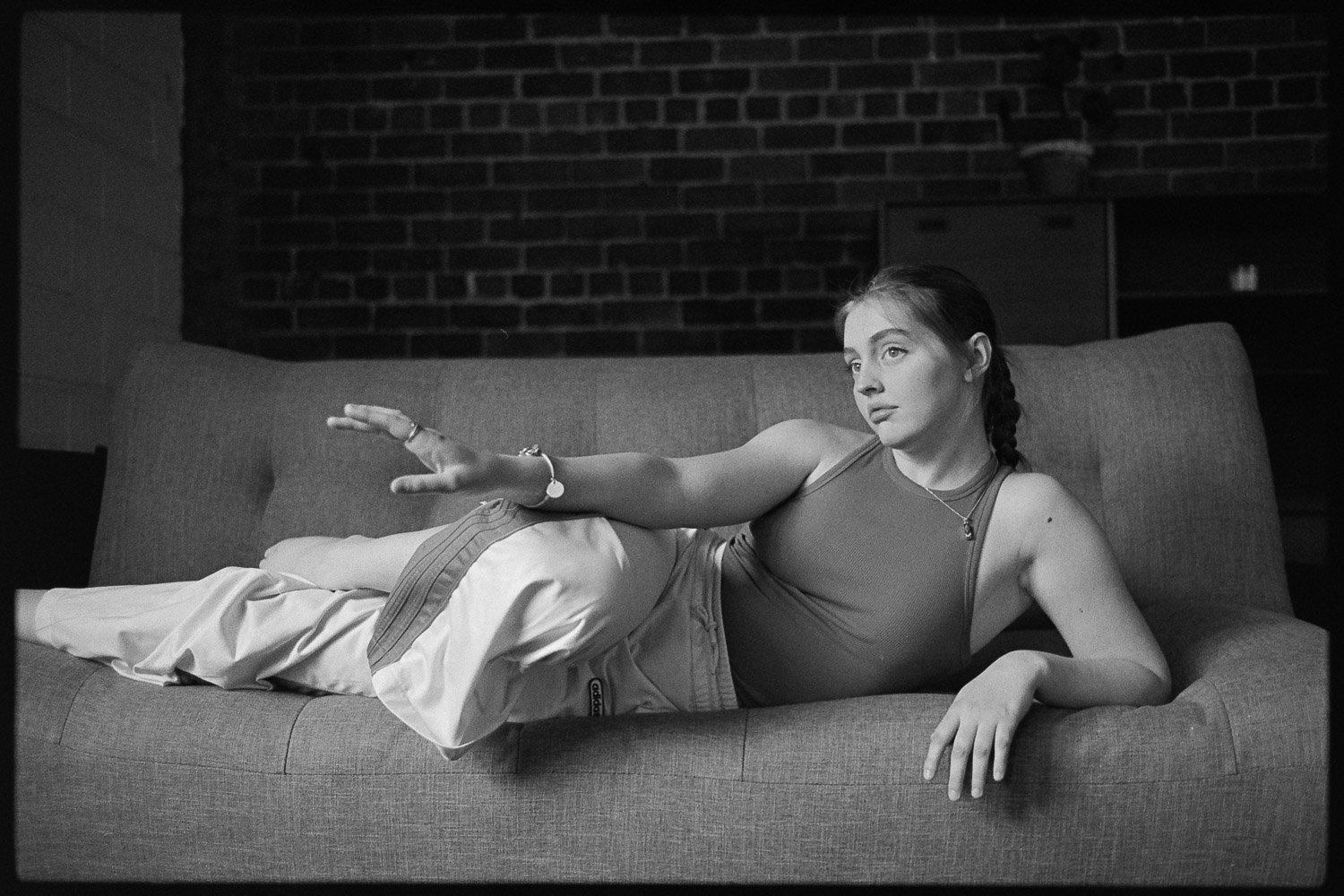
Leica M2, Kodak Tri-X 400
Here we’re in the same spot but the light has changed. Instead of providing almost a spotlight for the seated dancer, it’s covering a wider area, almost in a softer way. Perhaps some high cloud was performing the services of a softbox. Again I metered for the light falling onto the subject and adjusted my exposure accordingly. I love the way the black and white film renders the tones and shadows. It’s accentuated by the pose of the model who looks like she could be in a painting from the 1600s.
Steven Spielberg famously said “digital photography is a science - film photography is a chemical miracle”, and that is absolutely how I feel about it. I can visualise those photons whizzing through space from the sun, hitting the subject then bouncing at my camera. I decide how many get through to the film by choosing the size of the aperture and the shutter speed. But they hit that emulsion and what happens then is magic.

Nikon F3, Ilford HP5
I love this image of Kelsey Wolfe. Shot in a studio in Hebden Bridge on a very bright day, but with the sun shining on the other side of the building, so we were getting the softer reflected light bouncing in through the window. This was shot with my workhorse Nikon F3 and my Voigtländer 58mm f1.4 Nokton lens, close up and wide open. It’s always difficult working with a manual focus lens with such a narrow depth of field as even breathing in before you press the shutter release can mean you miss focus. But I am very happy with this one.
So whilst I will always enjoy working creatively with lights (and I have so much fun getting specific looks and effects with them) my basic love will always be natural light and those whizzing photons [citation needed].
Dx