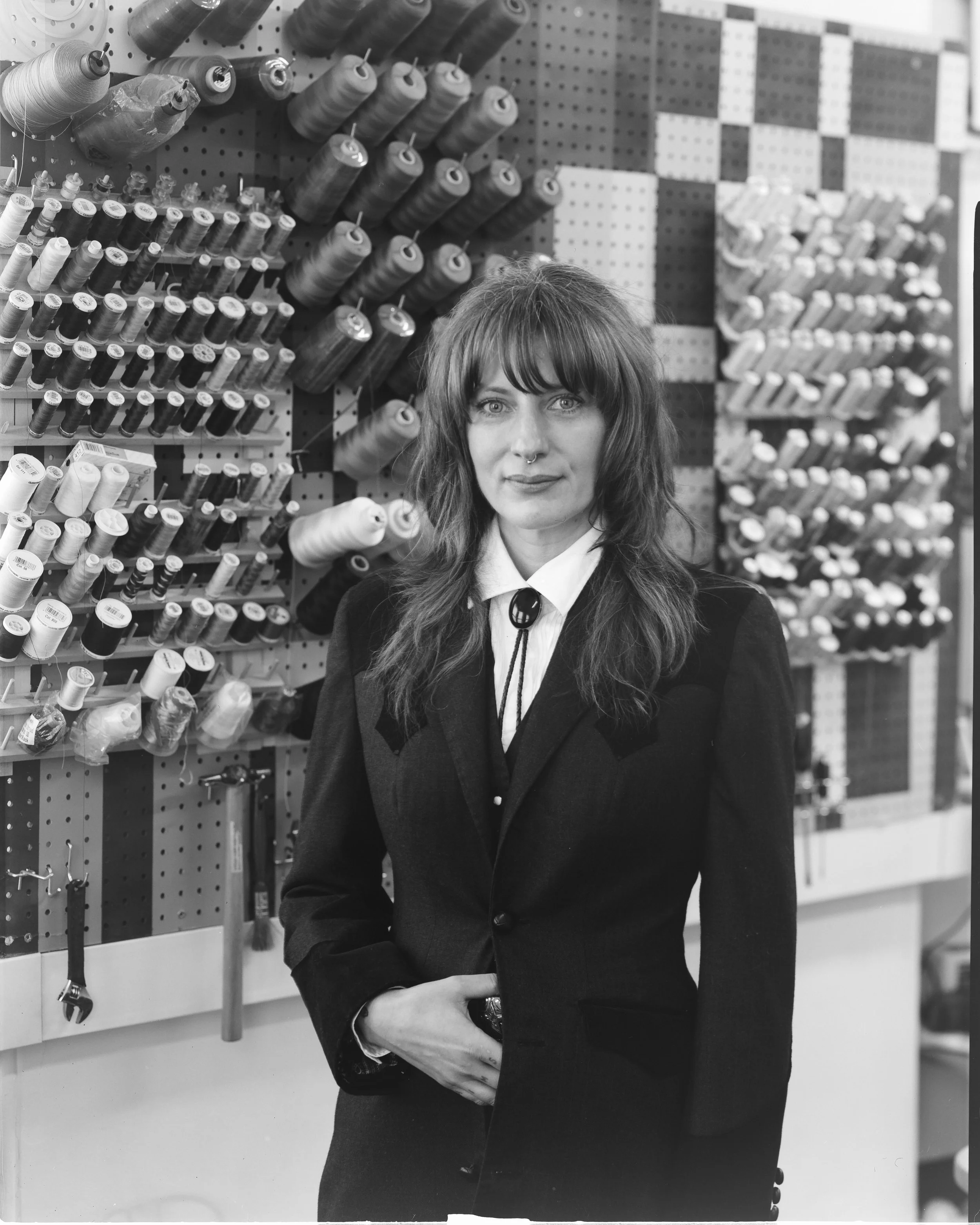
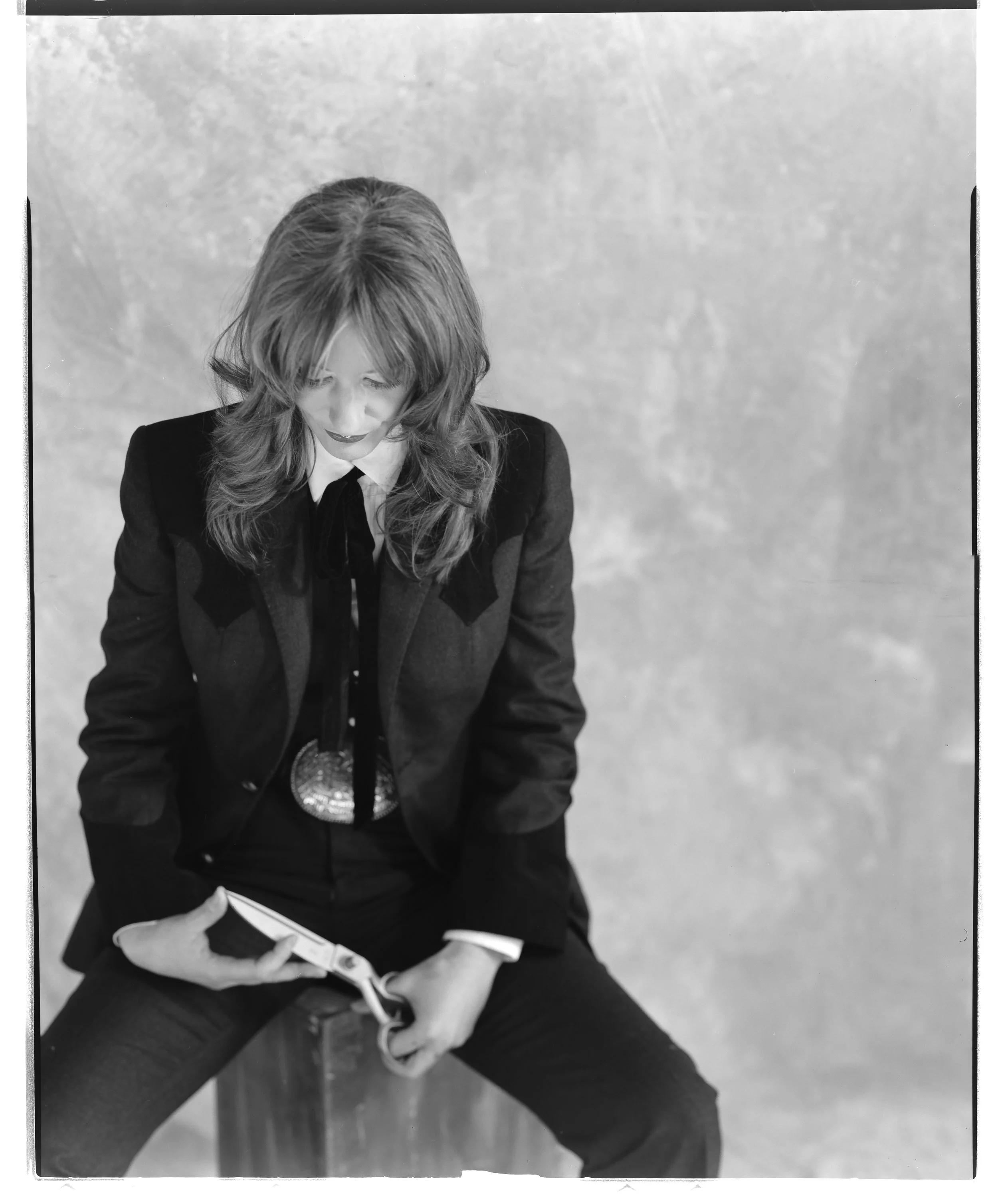
BESPOKE.
An analogue celebration of Texan tailoring and film photography.
Here are the images from my collaboration with Kellye-Sue Coffyn, the Cowboy Tailor. We shot these over a period of three months, with strict rules about how we worked together. There’s a blog post about this so do have a read of that by pressing the little button.
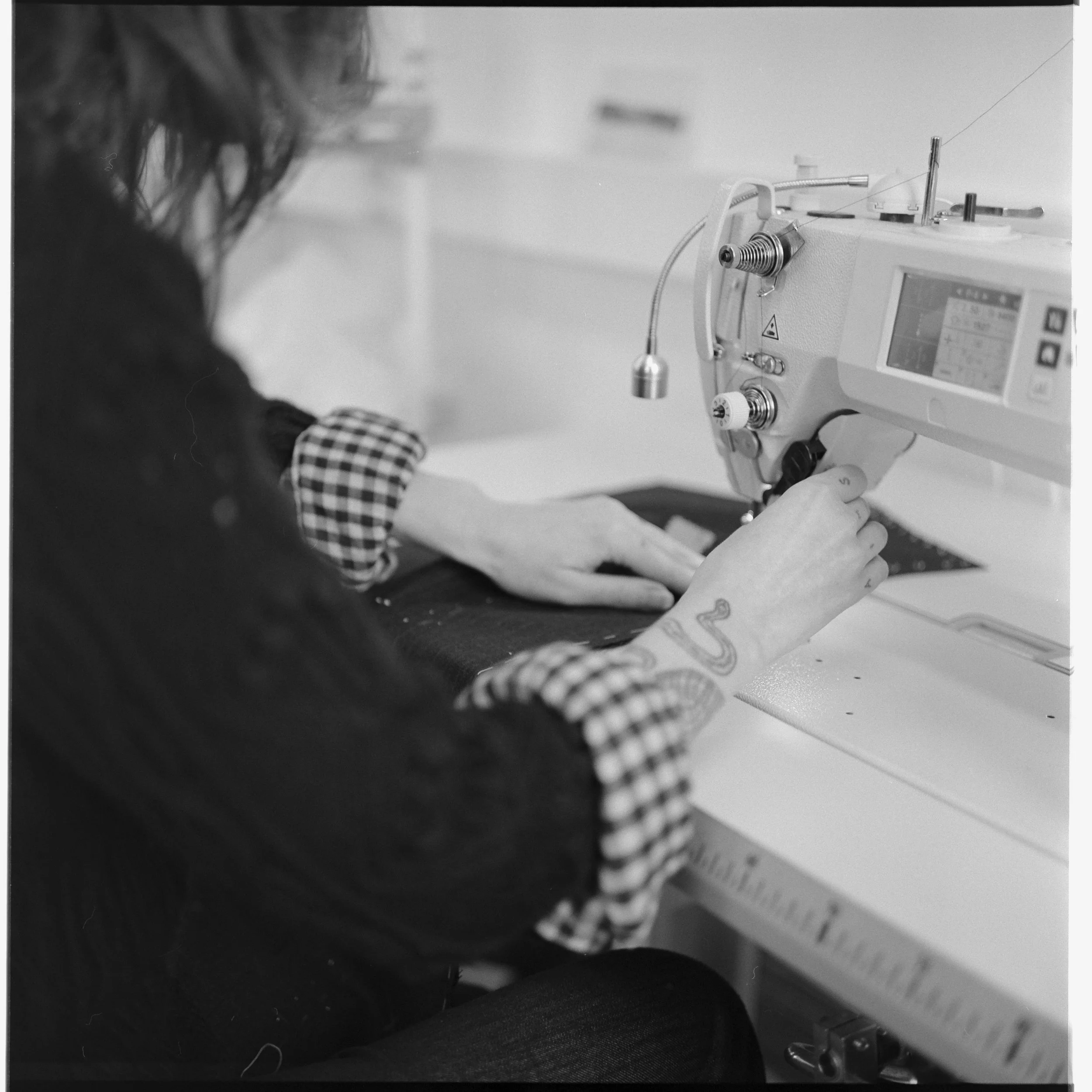
Me at my modern lockstitch industrial sewing machine, sewing one of the few machine-stitched seams in a bespoke jacket.
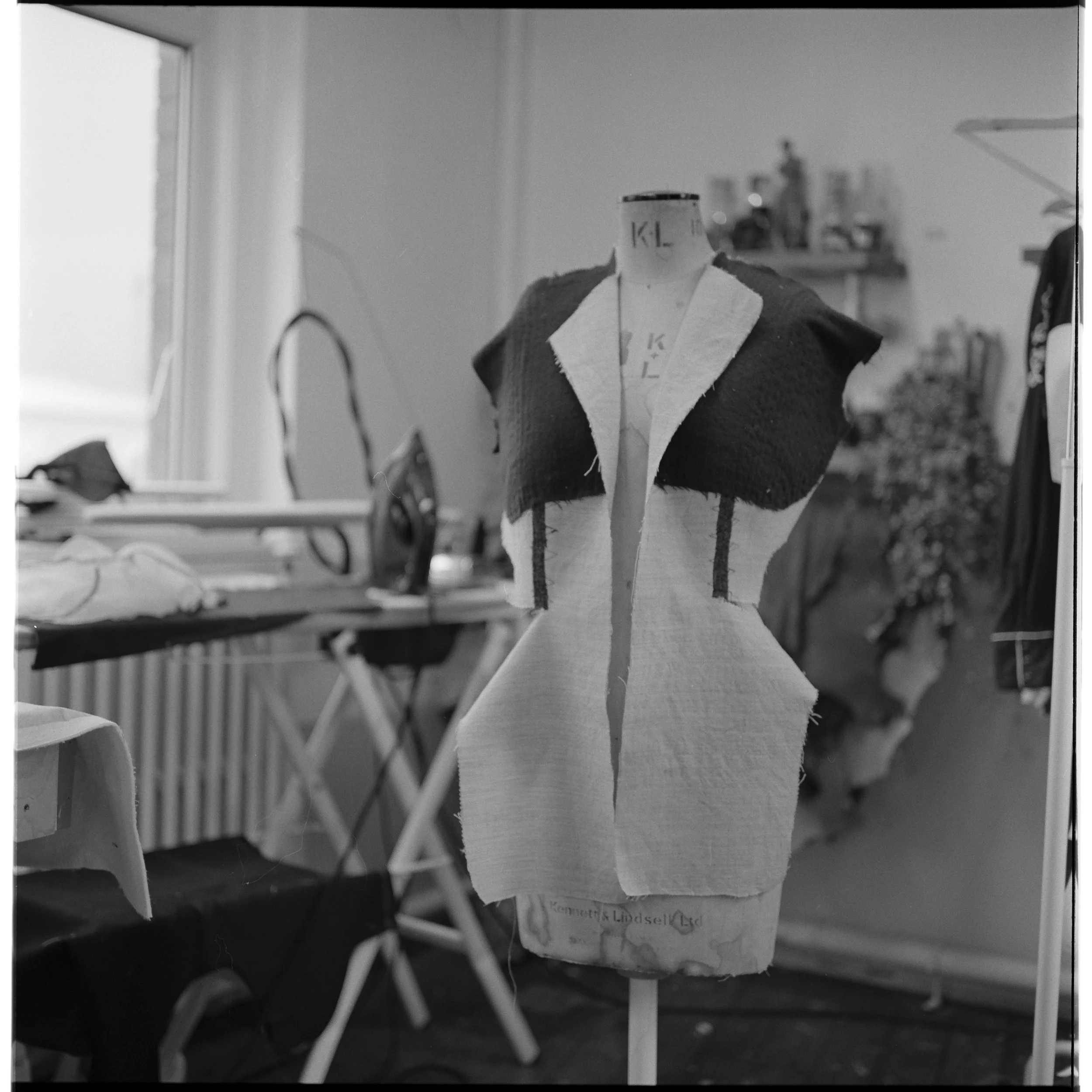
The canvasses - a layered structure composed of several different materials - the body and chest canvasses and domette. The first two provide shape and springy structure due to the horsehair content. The domette adds loft and softness, and protects the wearer from the spiky horsehair.
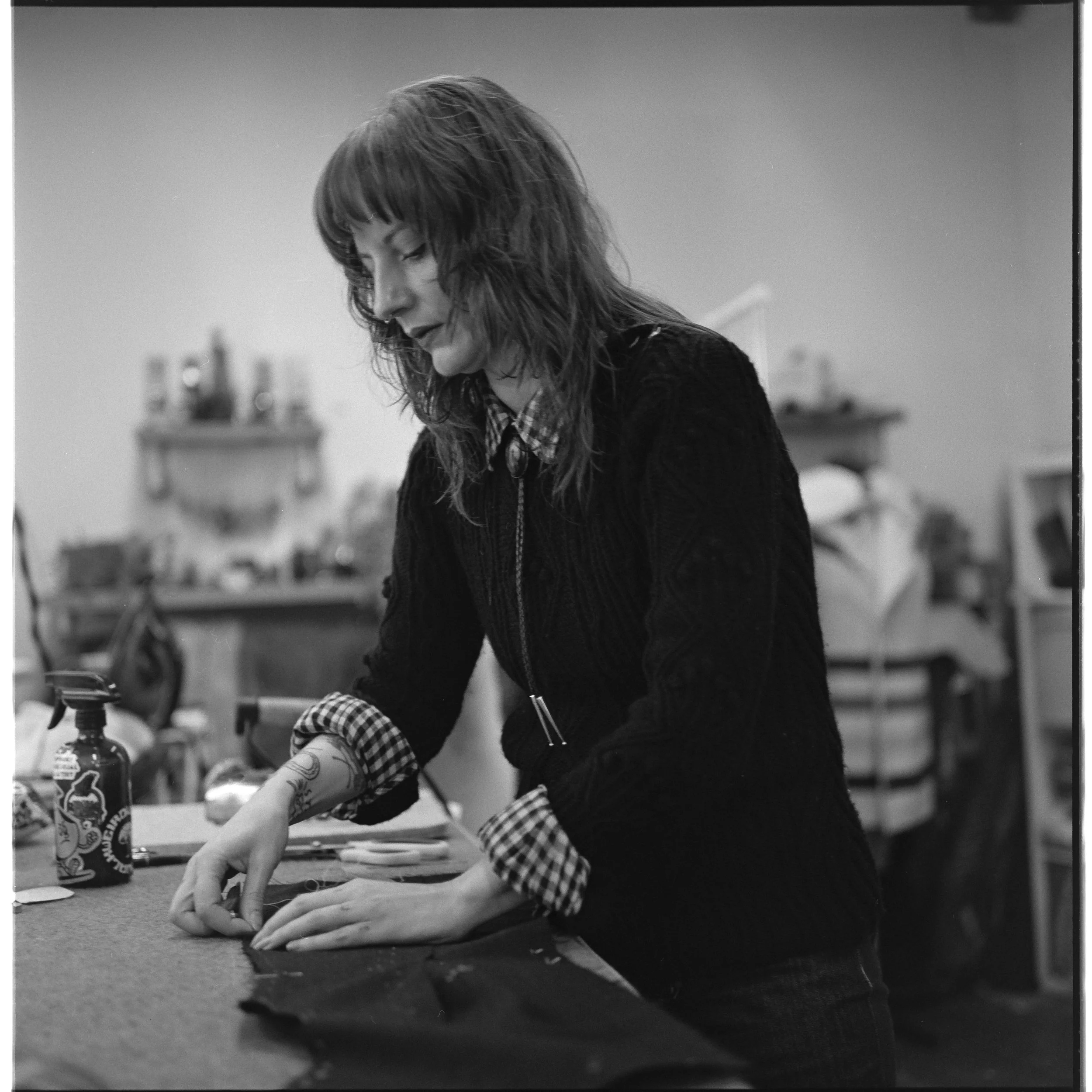
After the first fitting, the pin marks are documented to indicate how the jacket needs to be altered. The entire garment is then taken apart to apply the changes before being reassembled for the next fitting.
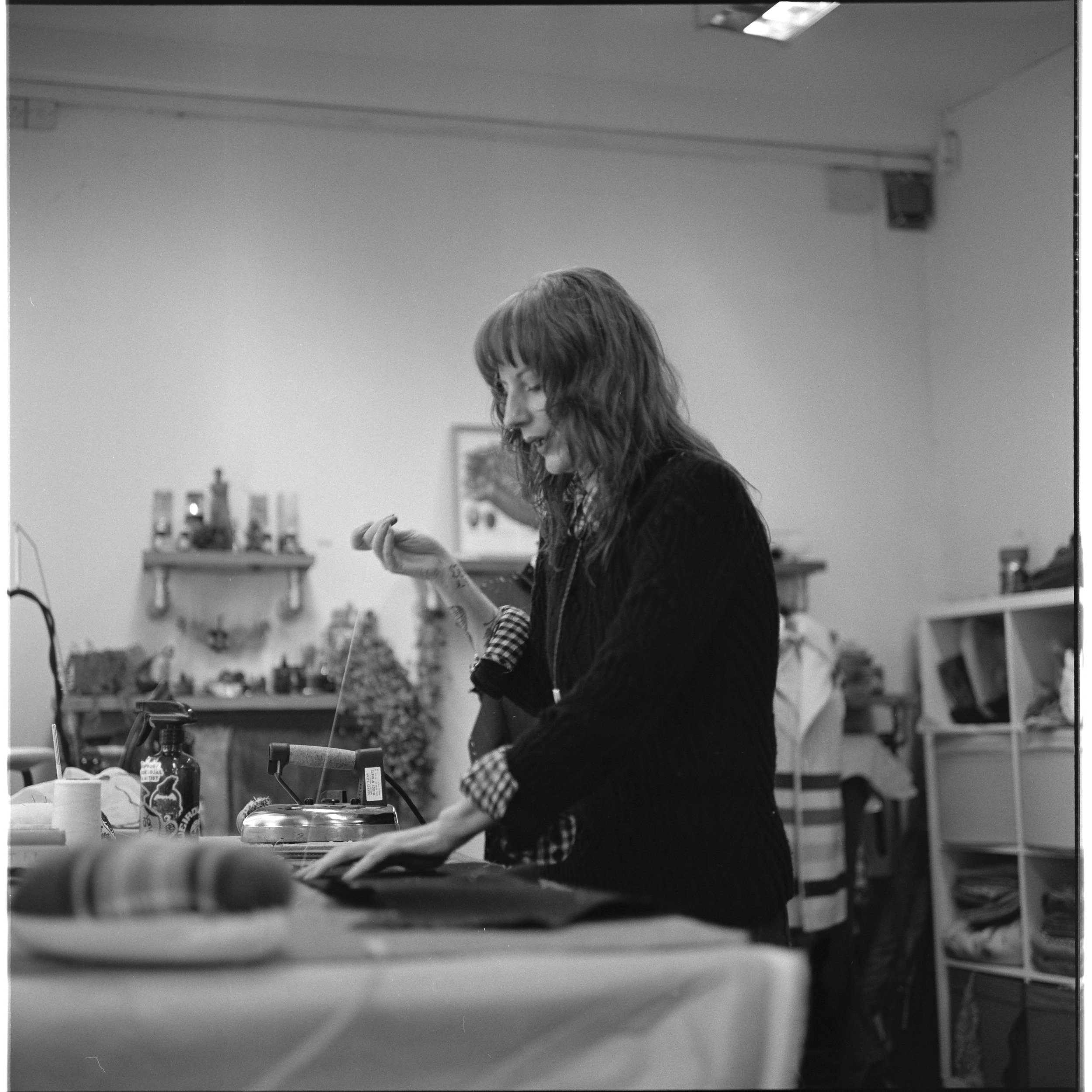
In bespoke tailoring, most seams are initially sewn by hand with cotton basting thread so they can be easily taken apart after fitting.
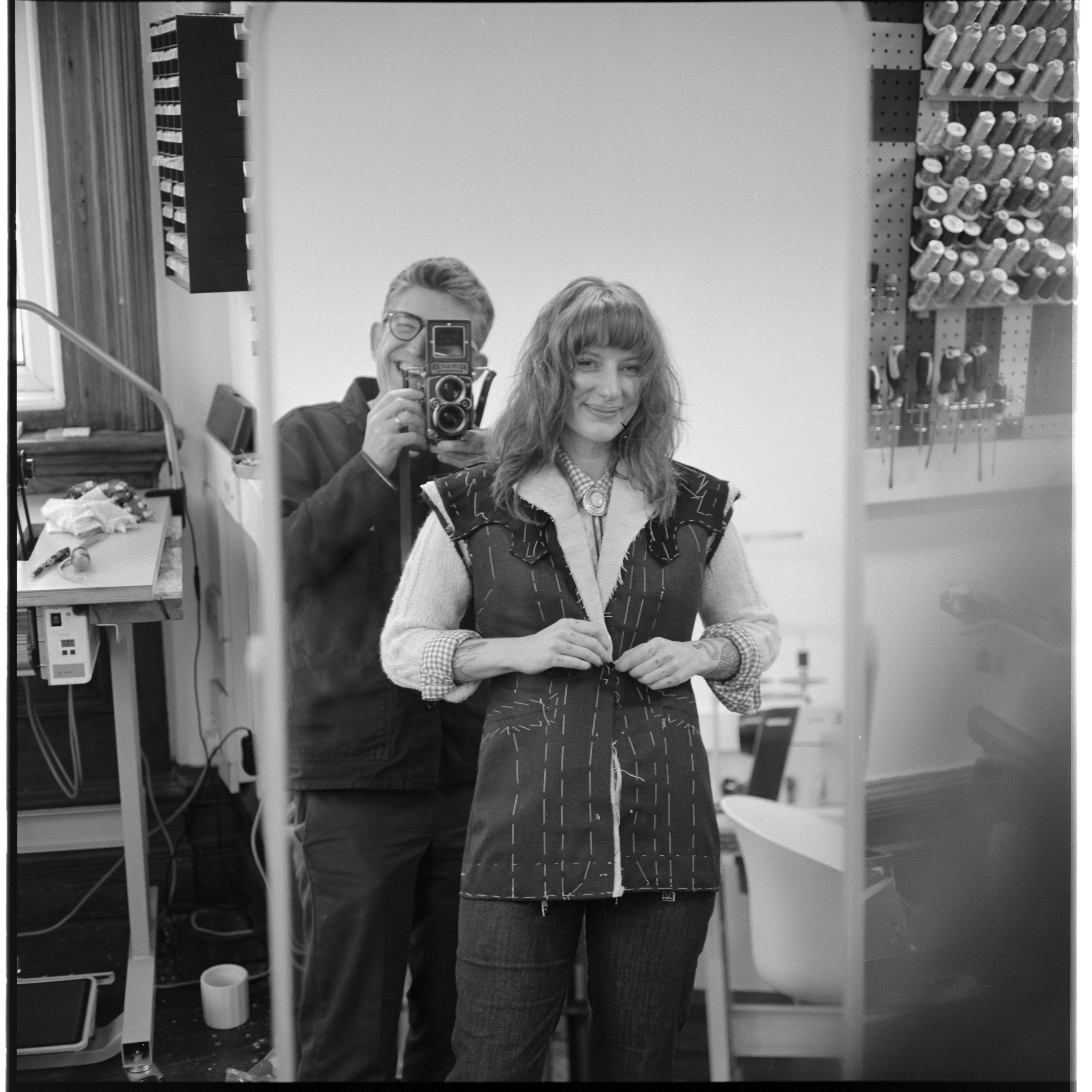
The first fitting - a.k.a. baste fitting. Used to check the fit of the garment. At this early stage, all the seams are sewn by hand with temporary basting thread so it can easily be deconstructed to apply alterations. There are usually 2-3 fittings in total before it's finished.
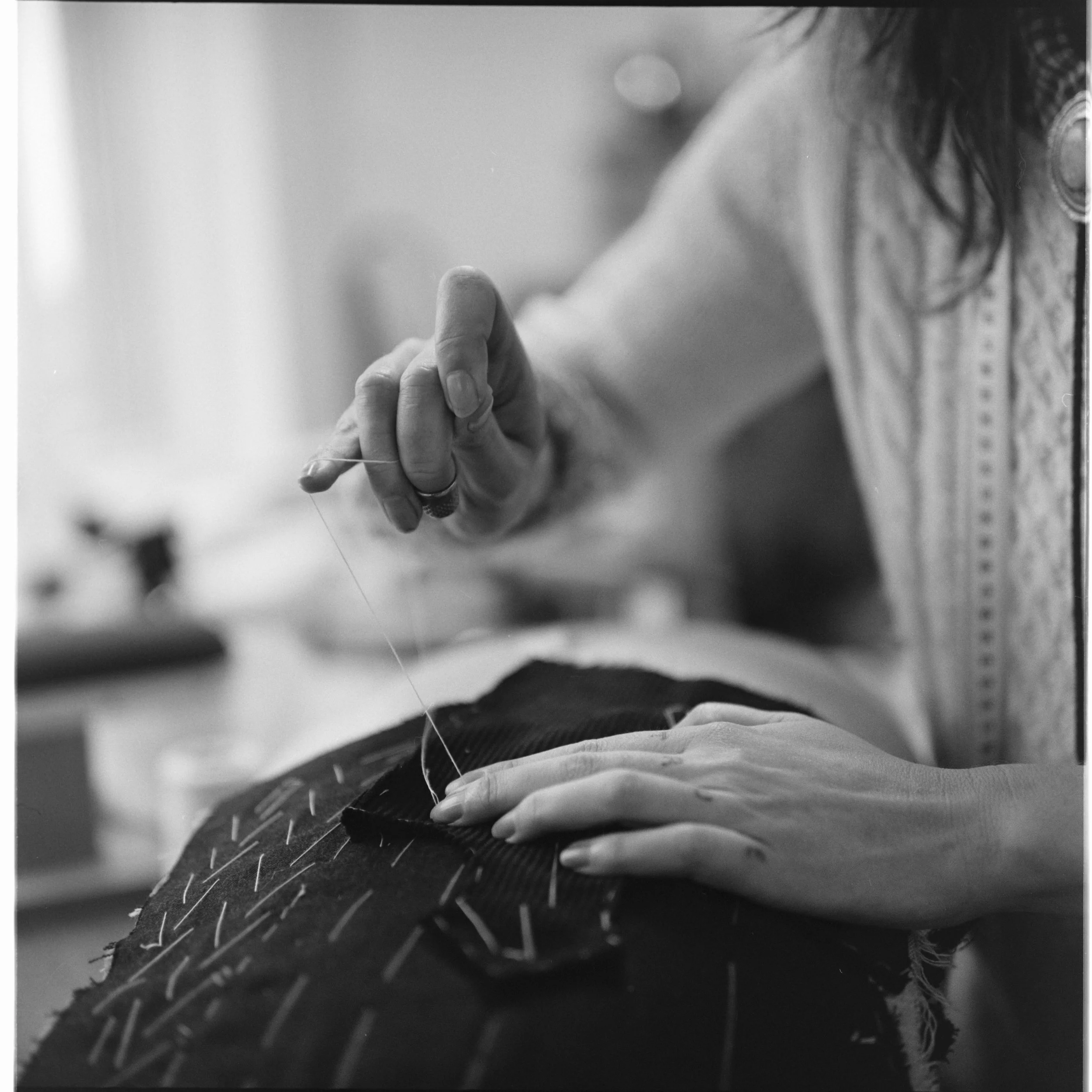
Basting on the yokes to decide on shape and placement. They will be permanently hand sewn on using silk thread and a prick stitch after the final fitting.
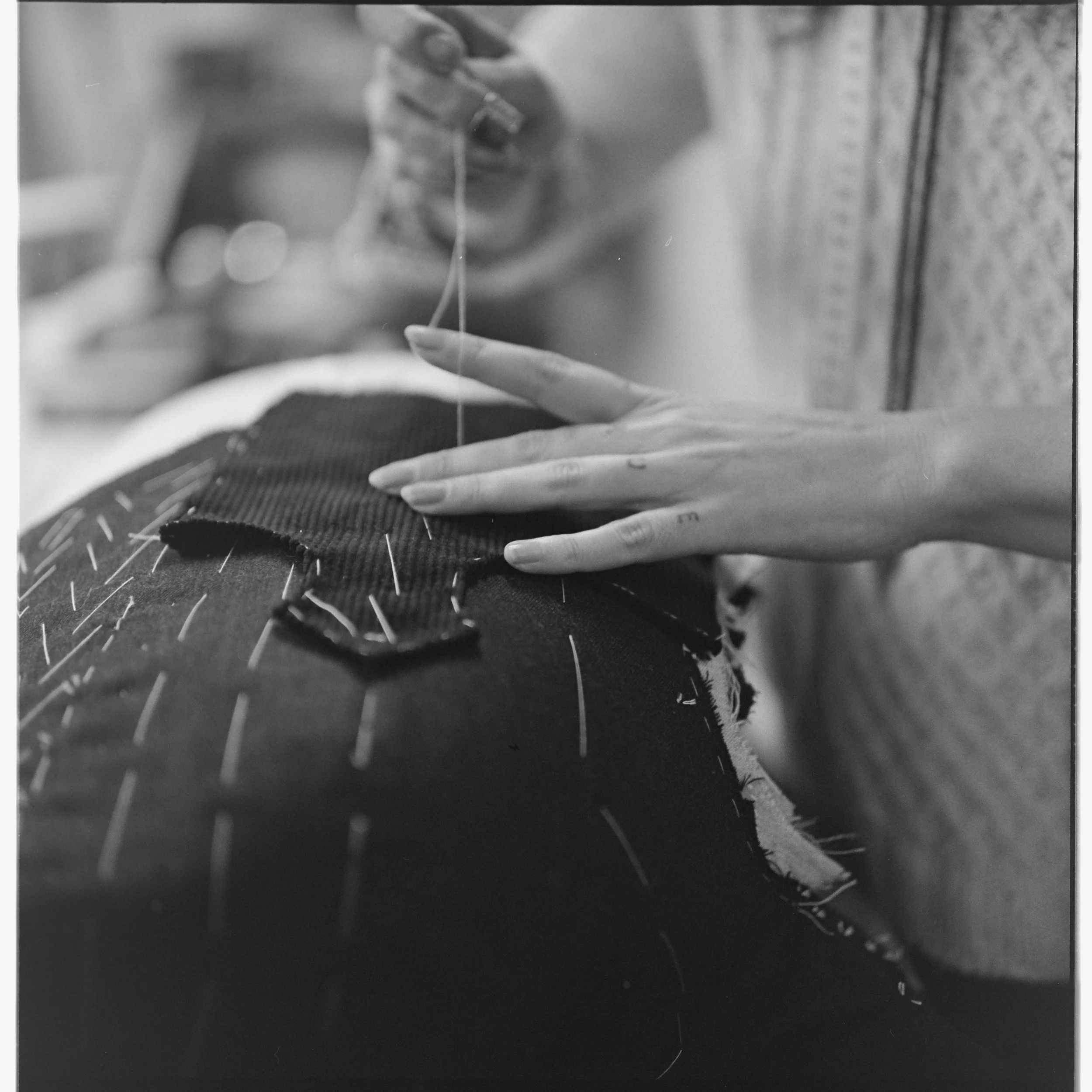
The yokes are hand-sewn on using basting thread to hold them temporarily until after the final fitting. Then they're permanently hand sewn on using silk thread.
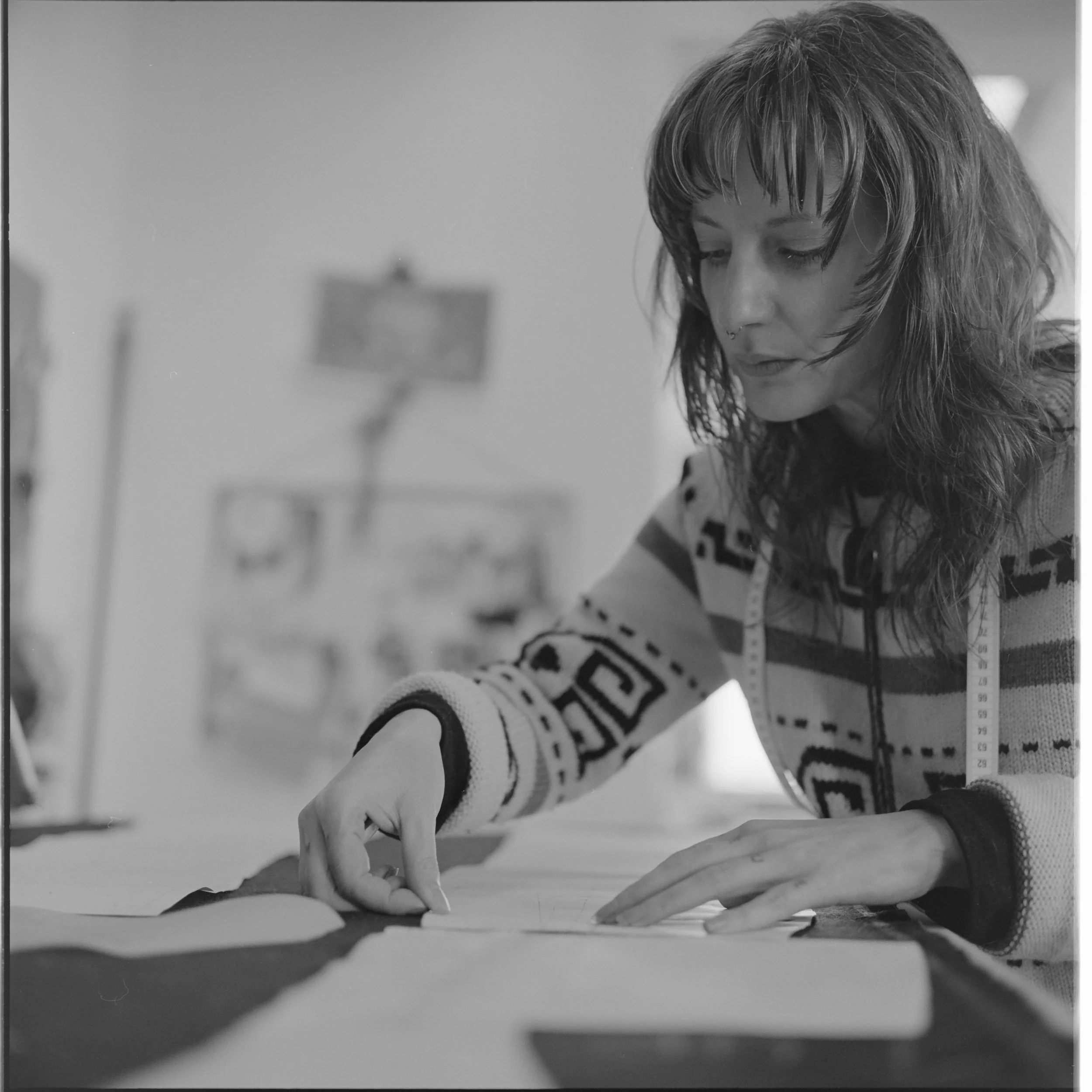
Striking out - marking with chalk - the yokes and their seam allowances using a hand-drafted paper pattern piece as a template to trace around.
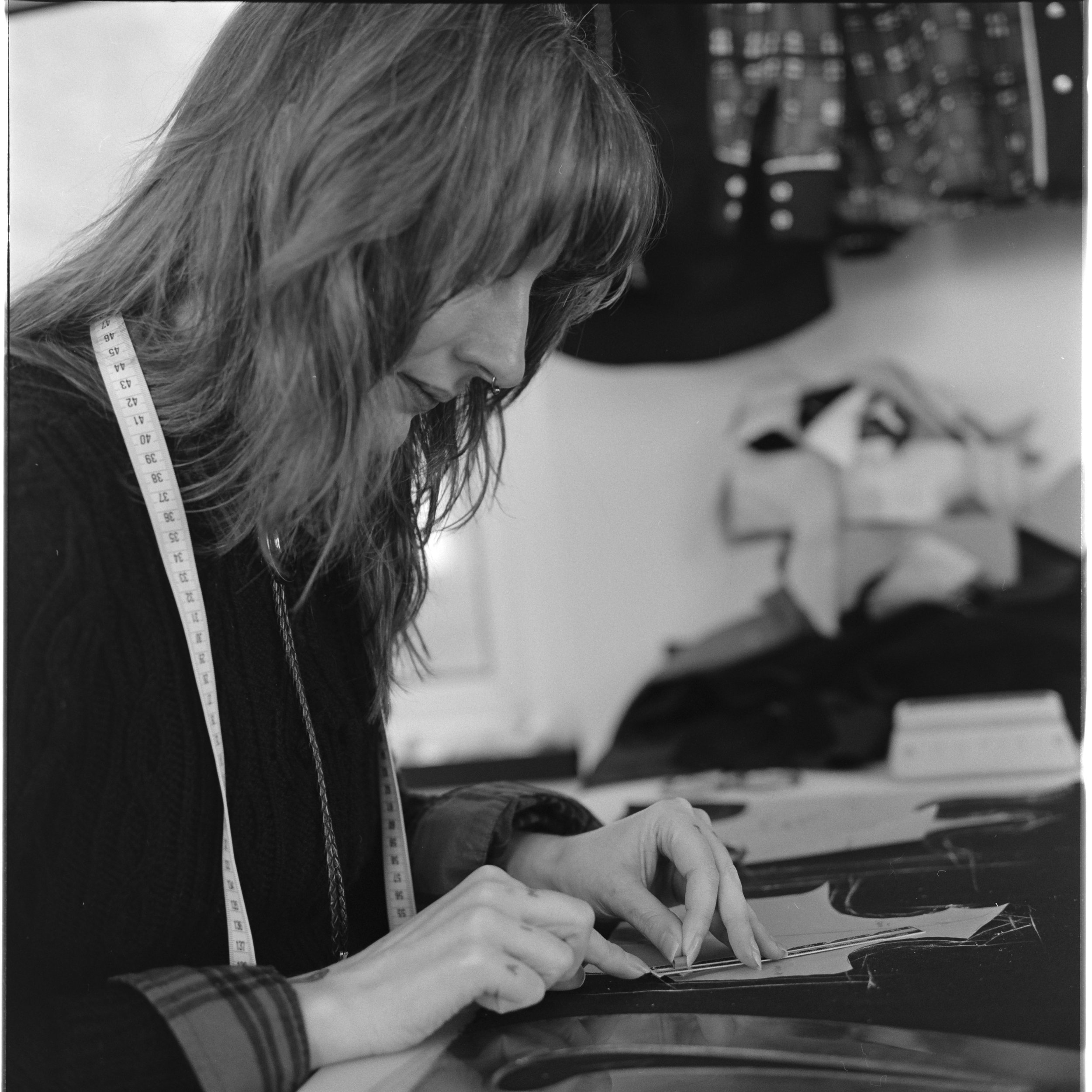
Striking out - the hand-drafted paper pattern pieces are traced with chalk and seam allowances are added to transfer the pattern to the cloth.
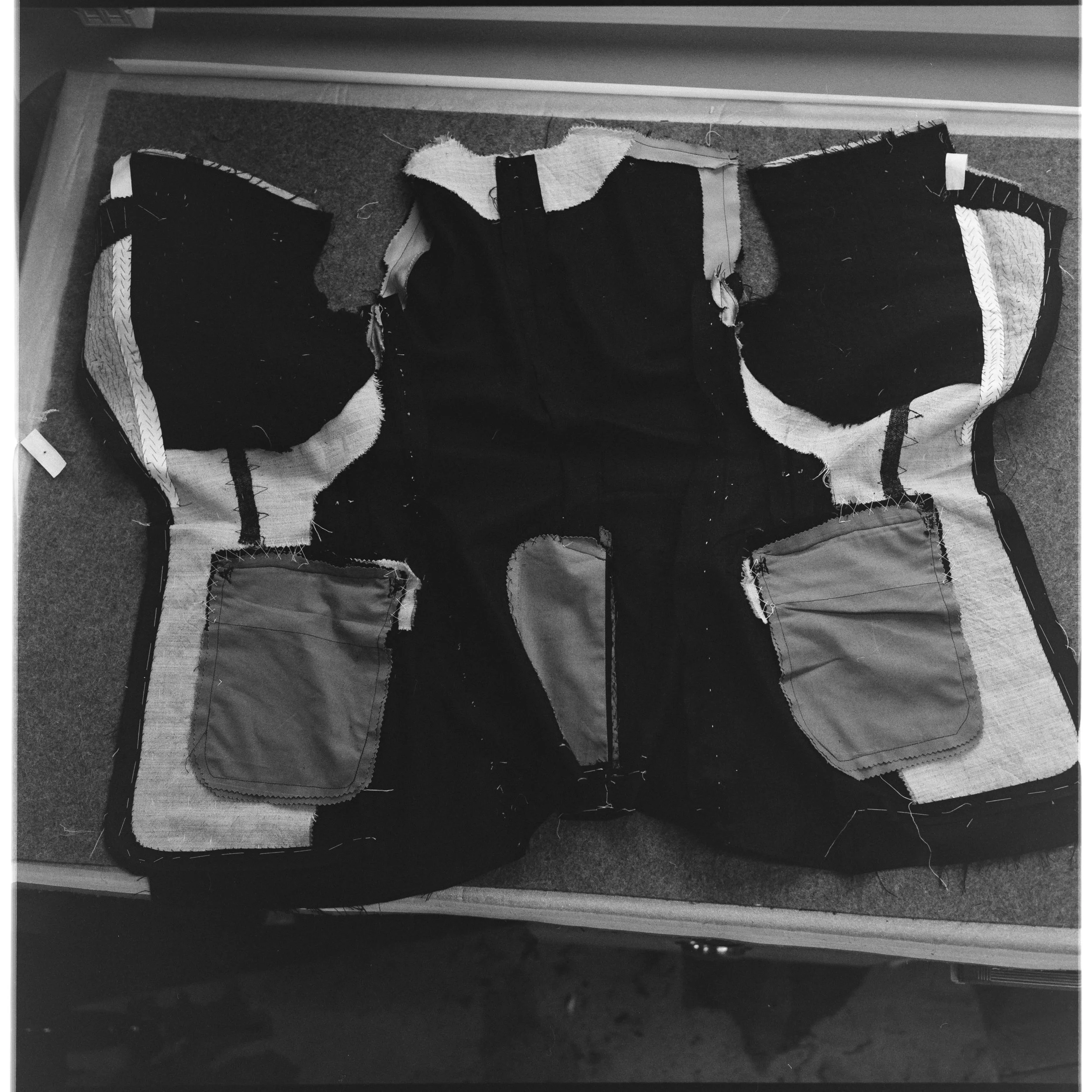
The guts of the jacket, including all the many different canvases that provide shape and structure.
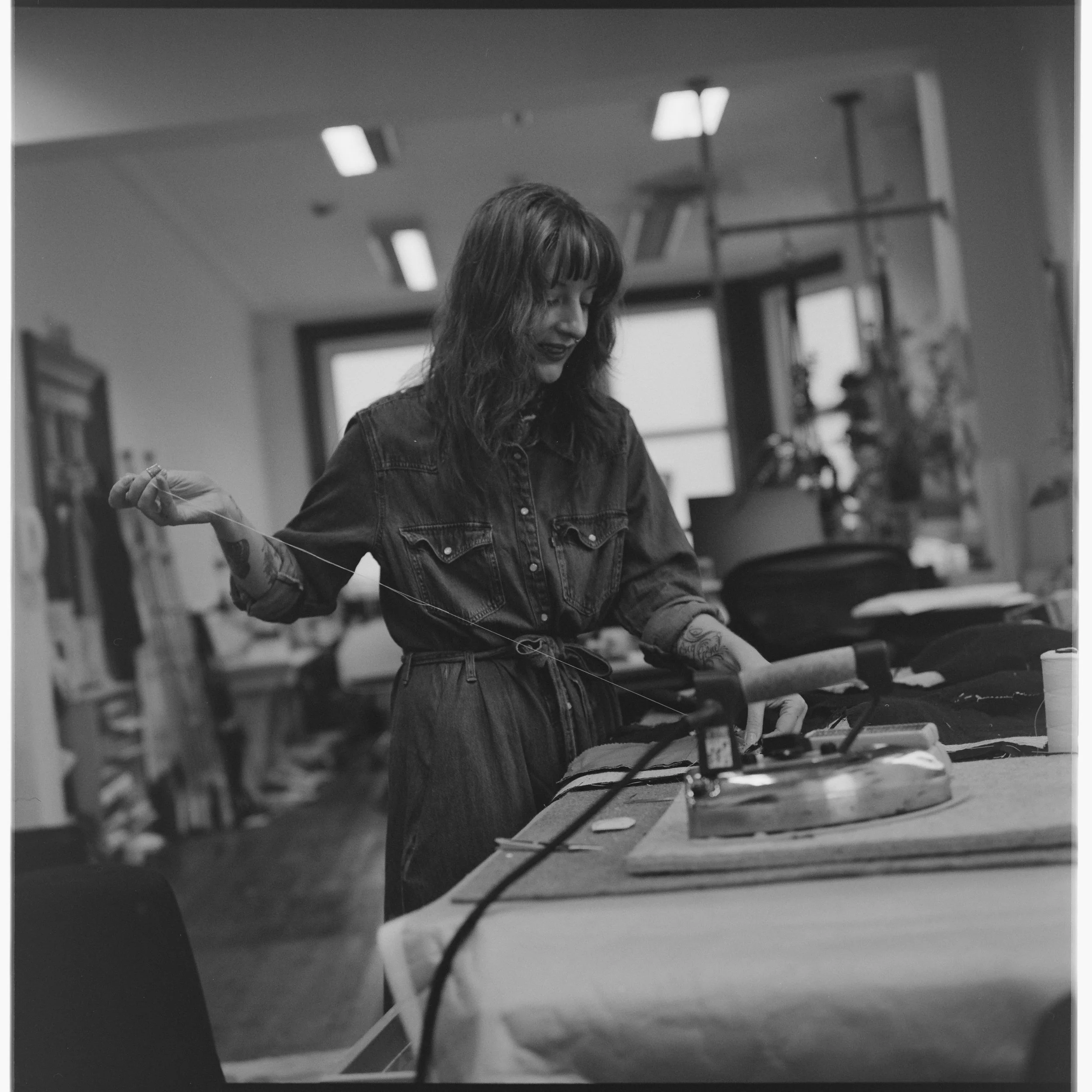
Basting is one of the most important and widely-used techniques in bespoke tailoring. It's all the dotted white lines you see on a suit before it's finished. An easily-breakable cotton thread is hand-sewn to create seams that can be easily deconstructed after fitting to apply alterations. This is how the perfect, custom fit (unique to the client) is achieved.
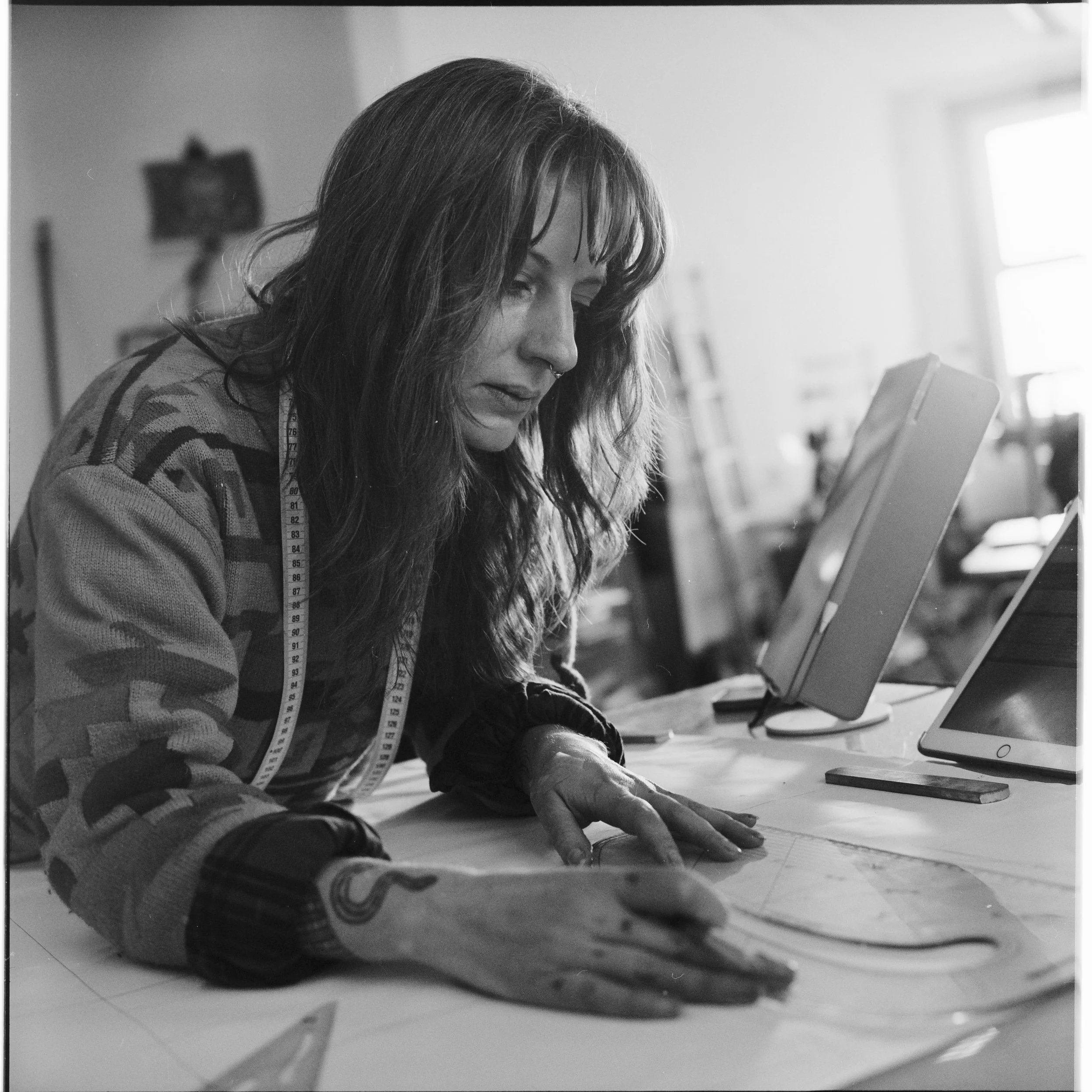
The full-scale pattern is hand-drafted on paper from a roll using the client's measurements and a range of drafting tools, including French curves, measuring tapes, compasses and straight-edges. Mathematical formulae are used to plot the garment's dimensions to provide a custom fit that's entirely unique to the client. There are no "standard sizes" in bespoke tailoring.
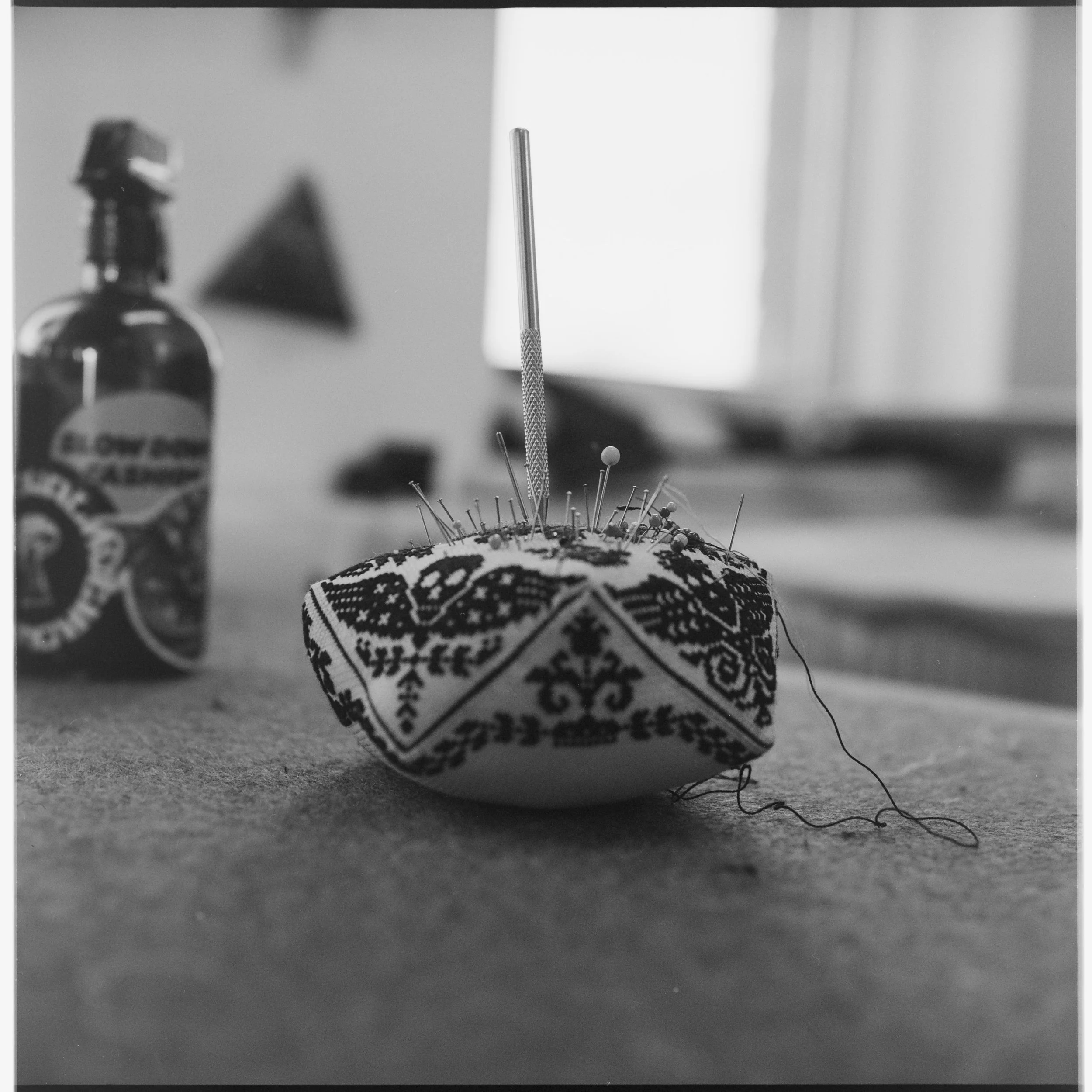
My hand-made pin cushion. I cross-stitched the design based on motifs from traditional New England tombstones.
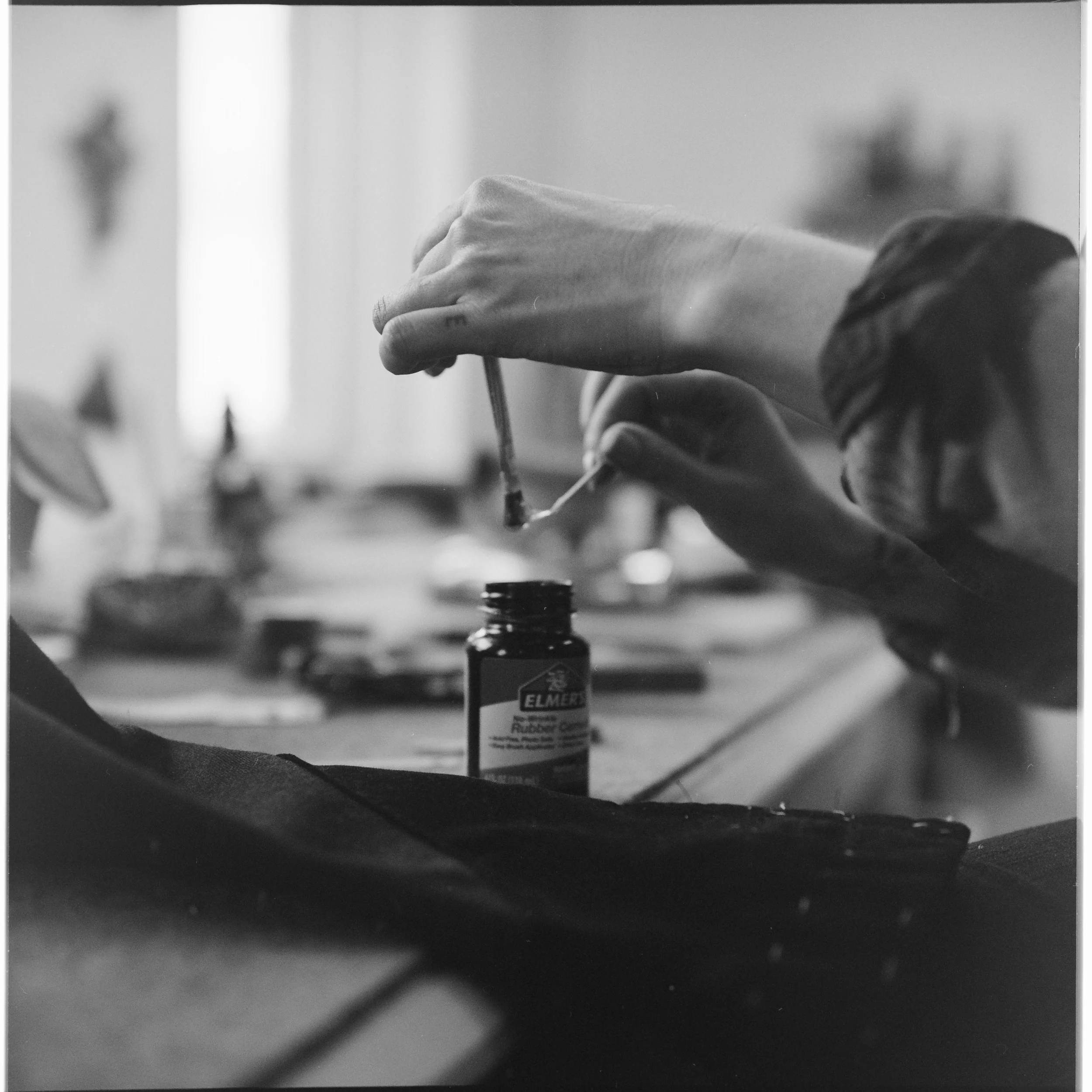
The goop! I use rubber cement applied with a toothpick to the cut edges of the buttonholes to seal the edges before the buttonhole is hand-sewn with silk thread.
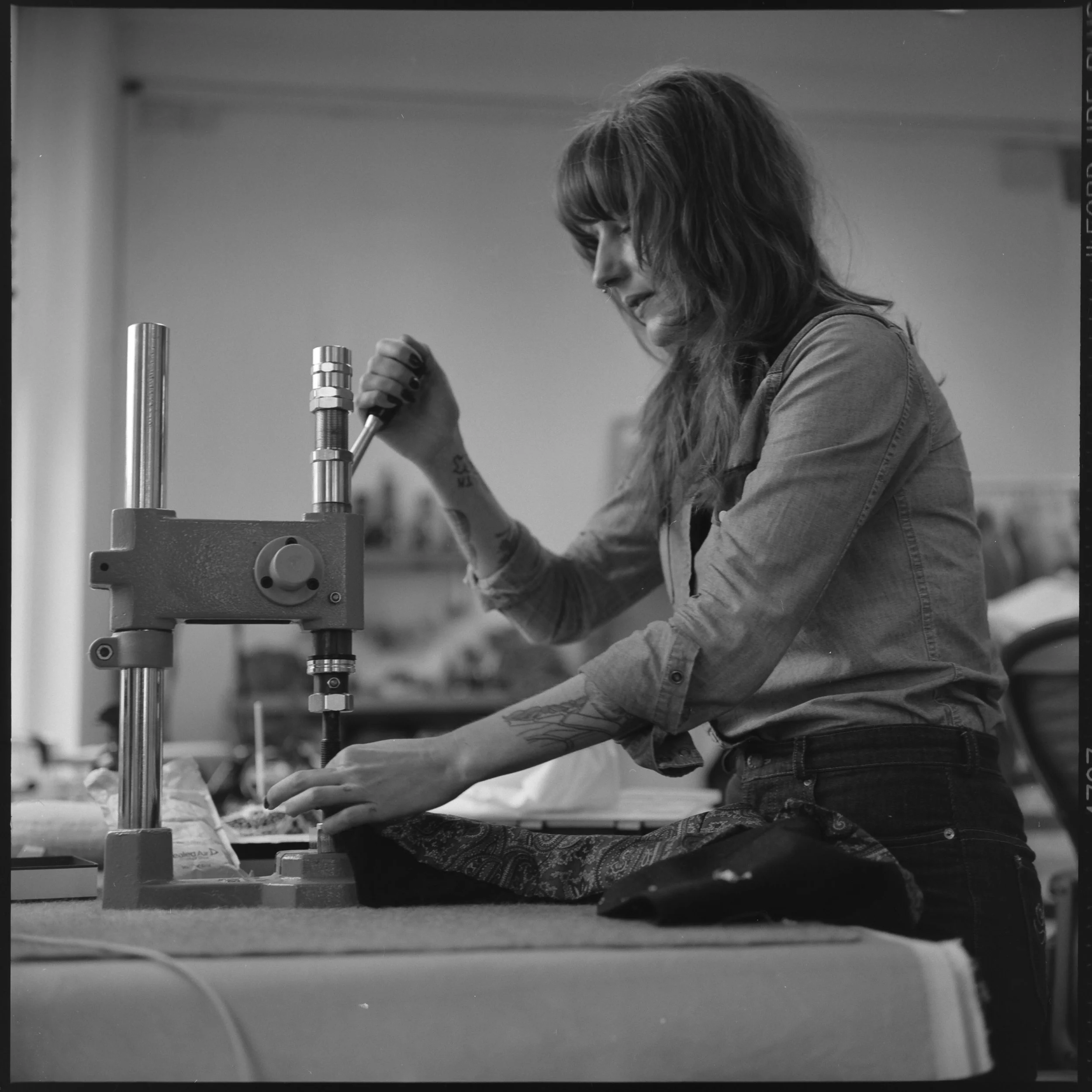
The handpress in use, installing the pearl snaps, which are traditional closures used in western wear. Why? The idea was that if you came off your horse and your shirt got caught, it would unsnap off, rather than have you dragged along with buttons.
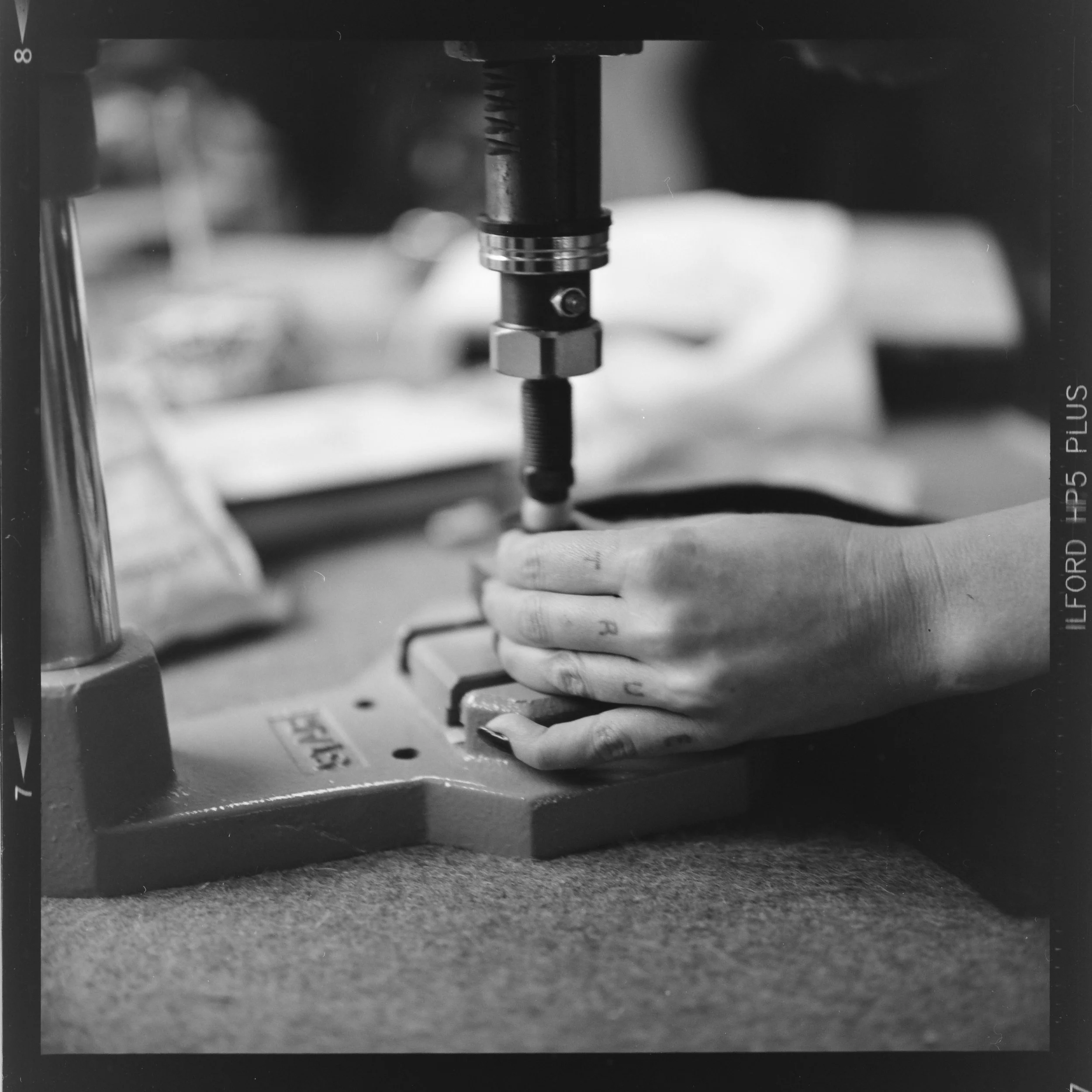
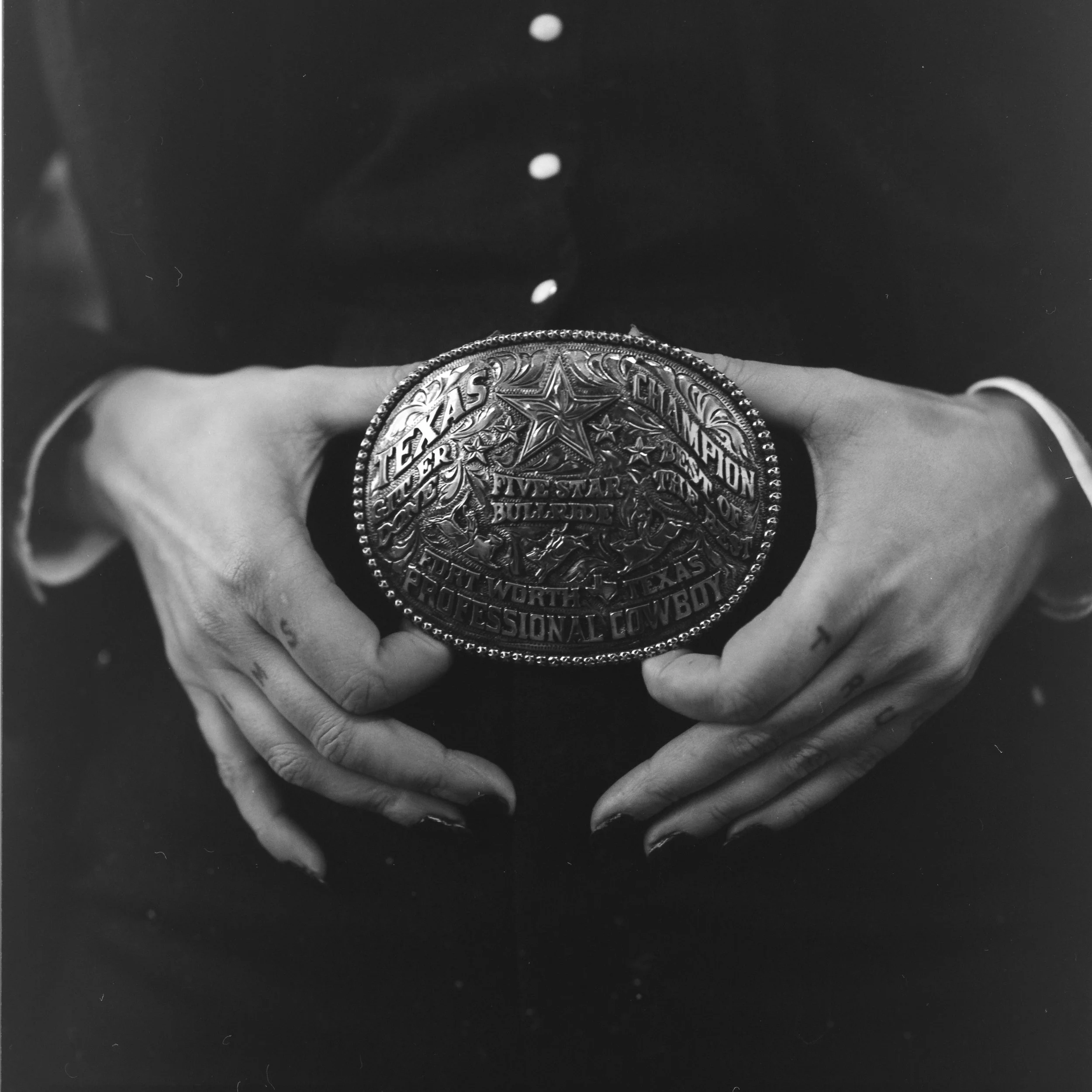
A close-up of the handpress that is used to install the traditional western pearl snaps (a.k.a. snap poppers) that close the waistcoat and the front trouser pockets.
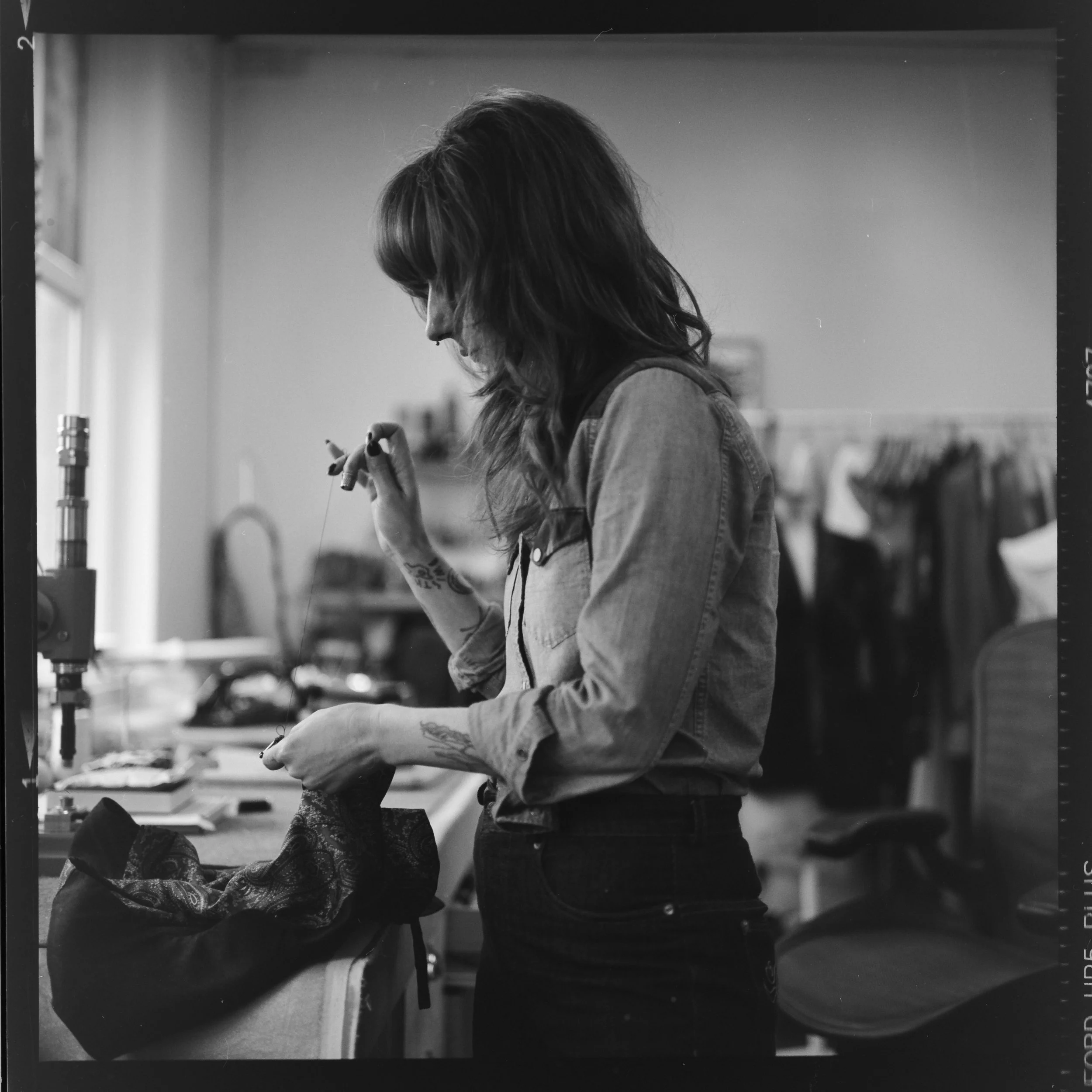
The sliding buckle is attached by hand to the adjustment tabs at the back of the waistcoat to provide an even closer fit that can be adjusted depending on the weight of the shirt under it.
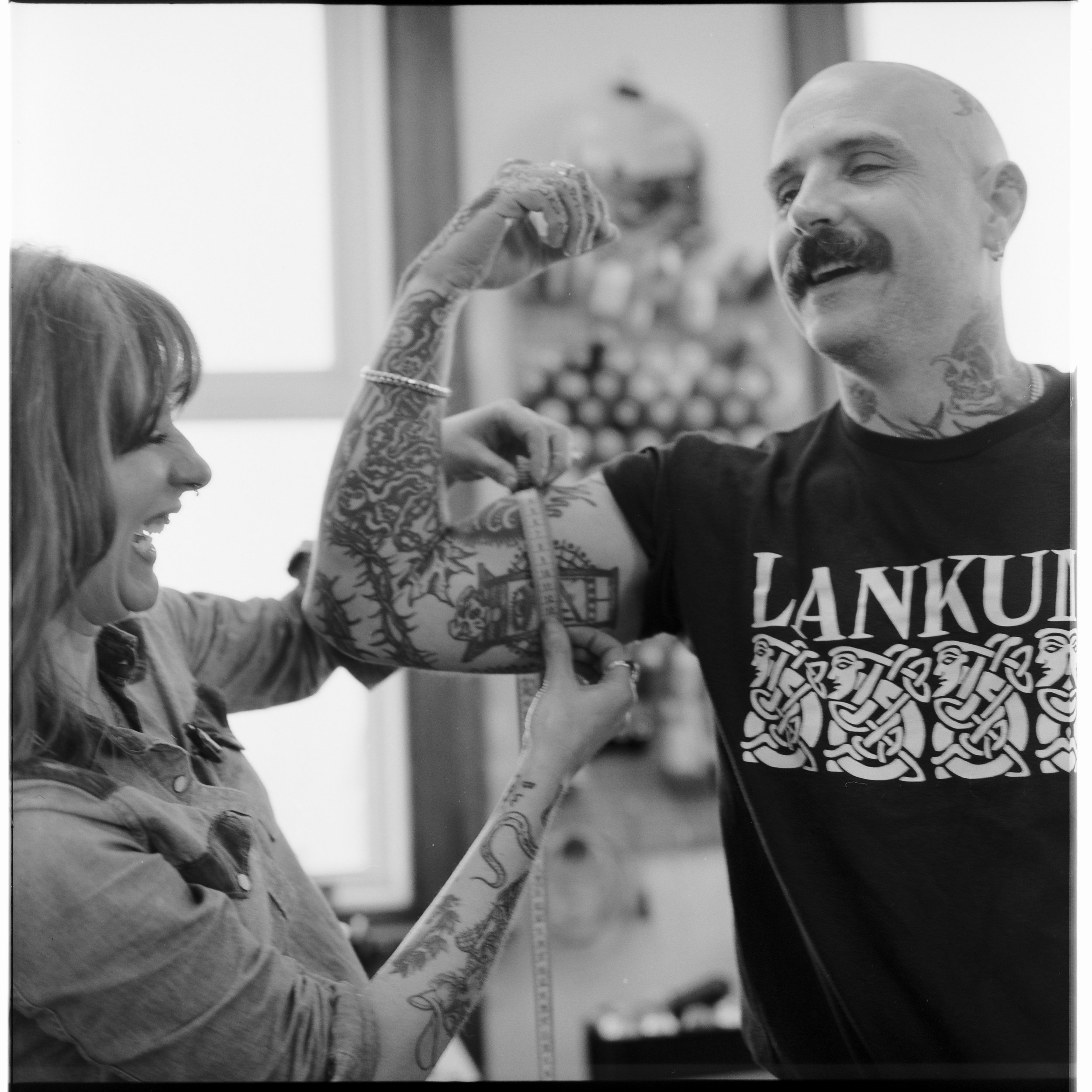
The first step of any bespoke garment is measuring the client. Height, chest, waist, hip, sleeve, inseam and other measurements are taken and then converted using mathematical formulae into a unique paper pattern. Steve kindly agreed to be my measurement model (and put up with my silly request to get this photo when we had one left on the roll).